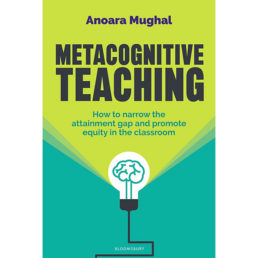
NEW: Metacognitive Teaching – How to narrow the attainment gap and promote equity in the classroom by Anoara Mughal




Empowering Educators. Inspiring Learners. Transforming Education.
At Think Future Learn, we believe that metacognition—the art of thinking about thinking—is the cornerstone of effective learning. Our mission is to equip educators and learners with the tools and strategies to foster self-regulated learning, enhancing motivation, confidence, and academic success.
What Is Metacognition?
Metacognition involves being aware of and controlling one’s own learning processes. It encompasses:
Planning: Setting goals and selecting appropriate strategies.
Connecting: Making connections to prior learning or life experiences.
Monitoring: Assessing one’s understanding and progress.
Evaluating: Reflecting on the effectiveness of strategies and outcomes.
By cultivating these skills, learners become more independent, resilient, and capable of tackling complex challenges.
Our Approach
We offer a range of evidence-informed resources and professional development opportunities designed to integrate metacognitive practices into everyday teaching and learning:
Teacher CPD Courses: Our comprehensive training programs delve into the principles of metacognition and self-regulated learning, providing educators with practical strategies to implement in the classroom.
Pupil Resources: Engaging materials that empower students to take control of their learning journey, fostering habits of reflection and self-assessment.
Assessment Tools: Resources to help educators evaluate and support the development of metacognitive skills in their students.
Our Approach
We offer a range of evidence-informed resources and professional development opportunities designed to integrate metacognitive practices into everyday teaching and learning:
Teacher CPD Courses: Our comprehensive training programs delve into the principles of metacognition and self-regulated learning, providing educators with practical strategies to implement in the classroom.
Pupil Resources: Engaging materials that empower students to take control of their learning journey, fostering habits of reflection and self-assessment.
Assessment Tools: Resources to help educators evaluate and support the development of metacognitive skills in their students.

We believe that metacognition should form the foundation of all education & we give you the tools to put it there.
We believe that metacognition should form the foundation of all education & we give you the tools to put it there.
Why It Matters
Research from the Education Endowment Foundation indicates that teaching metacognitive strategies can lead to an average of +8 months progress for students, particularly those from disadvantaged backgrounds.
The OECD’s 2014 report Critical Maths for Innovative Societies: The Role of Metacognitive Pedagogies explains that teaching students metacognitive skills can significantly improve their academic performance, including progress in math.
In the PISA 2018 Assessment and Analytical Framework, metacognition is identified as a significant predictor of students’ reading performance, alongside additional contributing factors such as motivation and study habits.
Researchers have found that children as young as 2.5 to 4.5 years old are already beginning to engage in metacognitive processes—that is, to “think about their own thinking.” By approximately 3.5 years of age, they show improved ability to judge their own certainty and to determine when assistance is needed. Moreover, children who demonstrated stronger early judgments of confidence also exhibited better memory performance by age 4.5. These findings indicate that young children develop metacognitive abilities earlier than previously assumed, and that supporting their awareness of when they feel certain or uncertain may enhance their memory and overall learning. (Gardier & Geurten 2024)
When students develop metacognitive skills, they’re not just learning content; they’re learning how to drive their own learning.
By embedding metacognitive practices into education, we aim to:
- Enhance student engagement and ownership of learning.
- Improve academic outcomes and reduce achievement gaps.
- Equip learners with skills for lifelong learning and adaptability.


How We Can Help Your School
Think Future Learn provides tailored support to schools seeking to integrate metacognitive strategies:
Consultancy Services: Expert guidance on embedding metacognition into school culture and curriculum.
Workshops and Training: Interactive sessions for staff and students to develop metacognitive skills.
Resource Development: Custom materials aligned with your school’s needs and objectives.
Explore Our Resources
Discover our comprehensive bundles designed to support both teachers and students:
Teacher Bundle: Over 50 resources to enhance teaching practices and foster a metacognitive classroom environment.
Pupil Bundle: Engaging activities and tools to help students develop self-regulation and reflective thinking skills.
Assessment Bundle: Tools to evaluate and track the development of metacognitive skills in students.
Each bundle is available for £40, or as a complete package for £90, offering a 25% discount
Upcoming Events
Coming Soon
What Educators Are Saying
“The training provided practical strategies that I could implement immediately in my classroom. It has transformed the way I approach teaching and has had a positive impact on my students’ engagement and progress.”
“The resources are clear, accessible, and have made a significant difference in my students’ ability to reflect on their learning and take ownership of their progress.”
Let's Work Together
Looking for metacognition CPD, whole-school training, a workshop or a speaker?